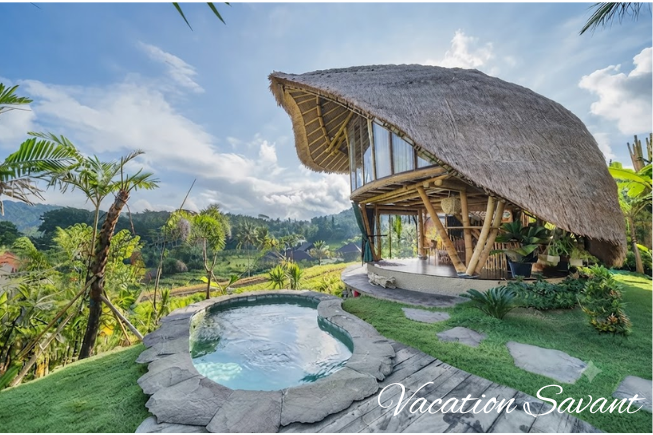
Wondering where to stay in Bali? Bali isn’t one destination. It’s closer to ten, and picking the wrong one is the single biggest mistake first-time visitors make. I’ve watched friends book a week in Kuta simply because it was the first name Google threw at them, then spend the whole trip stuck in traffic wishing they’d landed somewhere quieter. I’ve also watched people fall completely in love with Uluwatu’s cliffs, only to realize halfway through their stay that they never actually made it to Ubud’s rice terraces.
Where you base yourself here shapes almost everything about the trip: how much of your day gets swallowed by traffic, what kind of mornings you wake up to, whether you’re five minutes from a beach club or five minutes from a rice paddy. This guide walks through Bali area by area who each one genuinely suits, what it actually costs to stay there, and the trade-offs most hotel listings conveniently leave out.
Best Areas in Bali at a Glance
If you only have thirty seconds, this table gets you most of the way there. Everything below goes deeper.
| Area | Best For | Vibe | Price Range (per night) | Distance from Airport |
| Seminyak | First-timers, couples | Polished, beach clubs, dining | $25–$600+ | ~20 min |
| Canggu | Surfers, digital nomads | Casual, cafés, coworking | $25–$300+ | ~45 min–1 hr |
| Ubud | Wellness, culture, couples | Jungle, rice terraces, calm | $20–$1,000+ | ~1–1.5 hr |
| Uluwatu | Honeymooners, surfers | Dramatic cliffs, sunsets | $25–$600+ | ~45 min–1 hr |
| Sanur | Families, older travelers | Calm, low-key, sunrise walks | $25–$300 | ~30–40 min |
| Nusa Dua & Jimbaran | Families, resort-lovers | Polished, gated, all-inclusive-adjacent | $80–$500+ | ~15–40 min |
| Kuta & Legian | Budget backpackers | Busy, nightlife-heavy | $25–$500 | ~10 min |
| Amed & Candidasa | Divers, quiet-seekers | East coast, black sand, remote | $15–$250 | ~1.5–2.5 hr |
| Nusa Islands | Divers, photographers | Rugged, undeveloped, cliffside | $20–$200 | 30–45 min boat from Sanur |
Why You Can Trust This Guide
I’ve spent months on this island across several trips, splitting my time between the cliffs of Uluwatu, the rice terraces around Ubud, the surf breaks of Canggu, and the quieter stretch of the east coast. I’ve made most of the classic mistakes myself — booked a villa 45 minutes from anywhere useful, badly underestimated Bali’s traffic, and once picked a “quiet” area that turned out to sit directly above a beach club with a sound system loud enough to rattle the windows at midnight. Everything below comes out of those mistakes, conversations with expats who’ve called this island home for years, and drivers who know these roads better than any map does.
If you’re still deciding what to include in your trip beyond choosing a base, our Best Things to Do in Bali guide covers the island’s top attractions, cultural sites, waterfalls, and beaches.
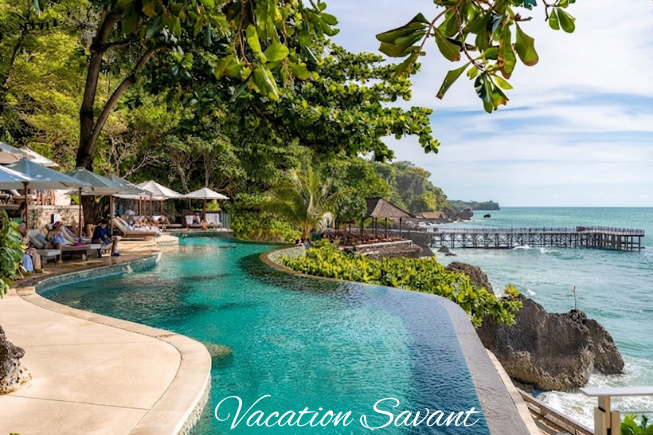
Which Area Fits Your Travel Style?
Before getting into the full breakdowns, it helps to think about what actually matters most to you on this particular trip, because the “best” area in Bali changes completely depending on the answer.
| Traveler Type | Best Area | Why |
| First-timers, want a bit of everything | Seminyak or Canggu | Central, easy access to food, beaches, and day trips |
| Couples & honeymooners | Uluwatu | Cliffside views, romantic sunsets, quieter beach clubs |
| Families with young kids | Sanur or Nusa Dua | Calm, shallow water and a low-key pace |
| Digital nomads & surfers | Canggu | Coworking spaces, café culture, consistent surf |
| Wellness, yoga, slow travel | Ubud | Rice terraces, retreats, no beach noise |
| Budget backpackers | Kuta, Legian, or Ubud’s outskirts | The cheapest beds on the island |
| Want to escape the crowds entirely | Amed or Candidasa | East coast, black-sand beaches, real quiet |
| Island-hopping or diving | Nusa Lembongan or Nusa Penida | Skips mainland traffic completely |
A lot of travelers try to force one hotel to do all of this at once, and that’s usually where the disappointment creeps in. If you want beach clubs, rice terraces, and a cliffside sunset, the honest answer isn’t a single “perfect” area, it’s splitting your stay. Someone chasing a relaxed honeymoon is almost always happier basing themselves in Uluwatu or Jimbaran and treating Ubud as a two-night detour, rather than trying to squeeze romance and jungle retreats into the same neighborhood. Families tend to do best anchoring in Sanur or Nusa Dua, where the water is genuinely safe for kids, and using day trips to see the rest of the island without dragging suitcases around every few days.

How Long Should You Stay in Each Area?
This matters more than most people expect, mainly because Bali’s traffic can quietly eat entire afternoons. On a trip of three or four days, the smartest move is almost always to pick one area and stay put; Bali rewards patience far more than it rewards hopping between hotels. Once you’re looking at five to seven days, splitting between two areas starts to make sense, usually one beach-side base and one inland stay. Canggu paired with Ubud, or Uluwatu paired with Ubud, are the combinations that come up again and again for good reason.
If you’ve got ten days or more, three areas become genuinely realistic, and this is exactly the situation our 7-day Bali itinerary was built to solve. It maps the logistics out day by day instead of leaving you to guess at drive times. Whatever you decide, resist the urge to see rice terraces, catch a wave, and watch a cliffside sunset all from one hotel. Bali is bigger, and considerably slower to cross, than it looks on a map.
1. Seminyak — The Easy All-Rounder
Seminyak is the area most people picture when they think “Bali resort town,” and honestly, it earns that reputation. It’s polished without feeling sterile, walkable in parts, and close enough to everywhere else that you’re rarely more than 20 to 30 minutes from a completely different vibe.
It sits about 20 minutes from Ngurah Rai Airport by car, longer once traffic kicks in after 4pm, and roughly 20 to 25 minutes from Canggu if you’re planning to bar-hop between the two on a night out. Budget travelers can find clean guesthouses from $25 to $45 a night, mid-range boutique hotels and villas run $70 to $150, and the beachfront luxury properties climb to $300, sometimes $600 or more.
What I love about Seminyak is that it doesn’t feel like it’s trying too hard. You can grab a $3 plate of nasi goreng from a warung tucked directly behind a $40 cocktail bar, and nobody blinks. The beach itself isn’t Bali’s best for swimming, the currents can run strong but the sunset view from a beach club chair, drink in hand, is genuinely hard to beat.
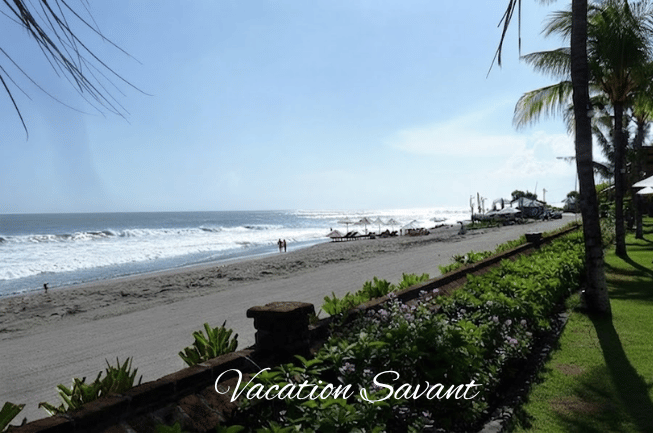
This area suits first-timers and couples who want beach clubs and good restaurants within walking distance. It’s less suited to anyone chasing total peace and quiet, because Seminyak stays busy even in low season. If you’re heading out for sunset around 6pm, skip the main strip on Jalan Kayu Aya, since it gets gridlocked with scooters, and walk the extra five minutes to a quieter beach access point instead. If you plan to swim rather than just wade, stick to sections with lifeguard flags; the riptide risk here is real in certain months.
For places to actually book, Grandmas Plus Hotel Seminyak is a solid budget pick within walking distance of Jalan Kayu Aya and the beach. In the mid-range, Hotel Indigo Bali Seminyak Beach delivers a beachfront location with a design-forward feel that punches above its price bracket. For something more indulgent, both The Legian Seminyak and The Oberoi Beach Resort Bali sit directly on Seminyak Beach and remain two of the most established luxury names on this stretch of coast. As with anything in a fast-moving market, confirm current rates and availability before you book, since ownership and branding can shift over time.
If you like Seminyak’s energy but want something a little more laid-back and creative, Canggu is the natural next step, and the classic pairing for a split stay.
2. Canggu — Surf, Coworking & Café Culture
Canggu is where Bali’s digital nomad reputation comes from, and once you spend a day there, it’s easy to see why. Black-sand beaches, a genuinely excellent café scene, and a surf break forgiving enough for beginners while still fun for intermediates.
It’s worth knowing upfront that Canggu isn’t really one neighborhood, it’s three. Batu Bolong is the lively center, walkable and packed with cafés, closest to the surf and Old Man’s beach bar. Berawa sits a notch more upscale, home to Finns Beach Club and a growing cluster of nicer villas. Pererenan is the quiet edge, still surrounded by rice fields, and the best pick for longer stays where you want a bit of peace without giving up café access entirely.
Expect roughly 45 minutes to an hour from the airport depending on traffic, and about an hour to 90 minutes from Ubud. Budget stays run $25 to $50 a night, mid-range villas $70 to $130, and if you’re staying a while, monthly villa rentals start around $800, a detail almost nobody outside Canggu itself advertises clearly.
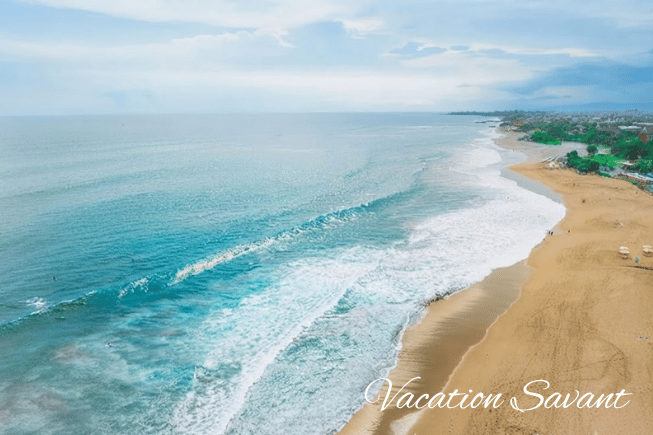
This area is built for surfers, remote workers, and anyone chasing that “live like a local, but with reliable WiFi” experience. It’s a harder sell if you hate traffic, because Canggu’s popularity has made Batu Bolong’s main roads genuinely frustrating during the day. If that wears on you, base yourself in Pererenan instead and simply scooter in for coffee, same café culture, without the daily fight for a parking spot. And while the beach breaks here are great for surfers, the undertow is real, so casual swimmers should be cautious going in past their knees.
For a place to stay, Roomates Hostel Canggu is a well-known, social budget option near Batu Bolong, popular with solo travelers and digital nomads. In the mid-range, look at a villa complex near Berawa close to Finns Beach Club, rice-field-adjacent and an easy walk to the café strip. For a genuine splurge, Hotel Tugu Canggu stands out for its Japanese-inspired Ji Restaurant and ocean-view terraces. One honest note worth flagging: Canggu has grown so fast in the last few years that its old “hidden gem” reputation is mostly gone. It’s still very much worth staying in, just arrive expecting a busy, developed town rather than the sleepy surf village it was a decade ago, and double-check any hotel names before booking, since this area changes hands faster than most.
If Canggu’s pace still feels like a lot, Ubud is the inland reset most travelers pair it with next.
3. Ubud — The Cultural & Wellness Heart
Ubud is where Bali slows down. No beach, no beach clubs, no scooters weaving around beach towels, just rice terraces, jungle, temples, and a genuinely serious wellness scene that has evolved well past the “Eat Pray Love” stereotype it’s often reduced to.
It sits about an hour to 90 minutes from the airport, and roughly the same from Canggu or Seminyak, which is exactly why most people pair it with a coastal stay rather than using it as their only base. Guesthouses and budget stays run $20 to $40 a night, mid-range villas with rice-field views land around $60 to $130, and the high-end jungle resorts push past $200, sometimes well over $1,000, for the kind of infinity-pool photo that ends up on every Bali Pinterest board.
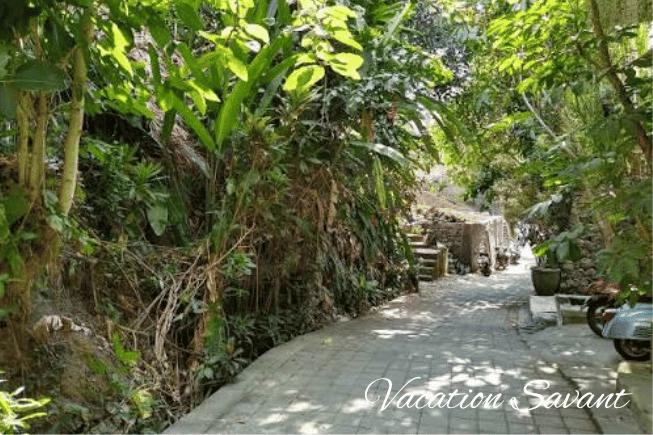
This area suits yoga retreats, art and culture, and couples wanting a quieter, greener trip, but it’s not the right pick if beach access matters, since the nearest coast is over an hour away. Nearly every long-term Ubud resident I’ve spoken to gives the same advice: stay just outside the town center, around Campuhan Ridge or Penestanan. You get the same rice-terrace views and jungle quiet without the tourist-shop congestion right outside your door. Do the Campuhan Ridge Walk at 7am rather than midday, since it’s a completely different, near-empty experience before the heat and the crowds arrive. Our guide to the Sacred Monkey Forest Sanctuary covers timing Ubud’s other main attractions the same way.
For where to actually stay, Ubud Aura Retreat is a good-value budget pick close to the Yoga Barn. In the mid-range, COMO Uma Ubud delivers rice-field and jungle views without the full luxury price tag. At the top end, both Four Seasons Resort Bali at Sayan and Viceroy Bali are set into the river valley and consistently rank among the island’s best jungle resorts. Ubud’s popularity means accommodation books out fast in July, August, and the December-to-January stretch, so if you’re set on a specific villa, aim to book two to three months ahead during peak season.
If you’re craving ocean views again after Ubud’s jungle calm, Uluwatu sits at the dramatic opposite end of the spectrum.
4. Uluwatu — Cliffs, Surf & Sunsets
Uluwatu might be my personal favorite corner of the island, and that’s saying something after staying in nearly every area on this list. Perched on limestone cliffs along the Bukit Peninsula, it has a rawer, more dramatic beauty than the flatter beaches further north.
Like Canggu, this area breaks down into sub-areas worth knowing. Bingin is a cult-favorite surf spot with a tight, fast left-hand break and a cliffside cluster of warungs. Padang Padang is smaller and more iconic, with a stairway entrance carved straight into the rock. Uluwatu proper is home to the clifftop temple and the biggest concentration of villas in the area.
Expect roughly 45 minutes to an hour from the airport, and 50 minutes to an hour from Seminyak or Canggu. Budget guesthouses run $25 to $45 a night, mid-range cliffside villas sit at $80 to $180, and true luxury clifftop resorts start around $300 and climb well past $600 for the best ocean-facing suites.
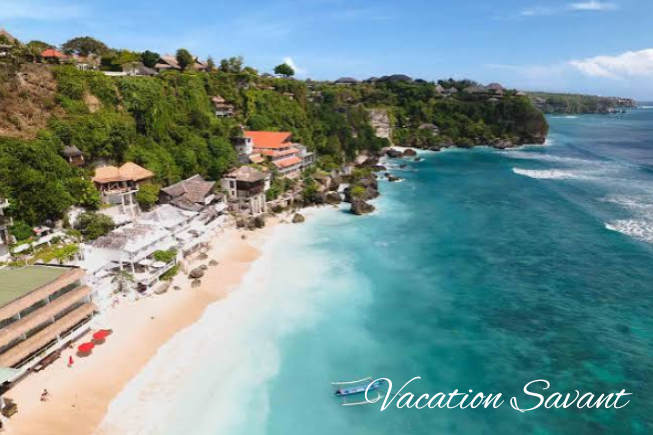
This is prime territory for couples, honeymooners, surfers, and anyone chasing that classic Bali cliff-and-sunset photo. It’s a tougher fit if you’re not comfortable on a scooter or hiring a driver, since Uluwatu’s spread-out layout genuinely requires transport, and the stairs down to most beaches are steep. If you want the specifics on the beaches themselves, which ones need proper hiking shoes, which have the wildest currents, our best beaches in Bali guide covers Uluwatu’s coastline entry by entry.
For hotels, Uluwatu Breeze Village is a solid budget choice around a ten-minute walk from Padang Padang Beach. In the mid-range, Gravity Eco Hotel is a well-regarded, design-conscious pick right on the peninsula. For a real splurge, Bulgari Resort Bali and Alila Uluwatu are both iconic clifftop properties and among the most photographed hotels on the island. Book a sunset table at a cliffside warung in Uluwatu proper at least a day ahead in peak season, since the good ones fill up by 4pm, and if mobility is a concern for anyone in your group, ask specifically about stair count before booking anything that advertises “beach access.”
If cliffs and surf aren’t quite your speed, Sanur on the opposite side of the island offers the calmest possible contrast.
5. Sanur — Bali’s Best-Kept Family Secret
Sanur doesn’t get the Instagram attention that Canggu or Uluwatu do, and honestly, that’s part of its charm. The water here is calm and shallow, genuinely closer to a giant bathtub than open ocean, which makes it one of the very few beaches on the island where you don’t have to think twice before letting kids swim.
It’s about 30 to 40 minutes from the airport, and roughly 30 minutes from Canggu. Budget guesthouses start around $25 to $40 a night, mid-range hotels run $60 to $120, and beachfront resorts sit around $150 to $300, noticeably cheaper than equivalent beachfront properties in Seminyak or Uluwatu.
This area suits families with young kids, older travelers, and anyone who wants a slower-paced beach town without giving up restaurants and cafés entirely. It’s not the right pick if you’re after nightlife or a lively beach-club scene, because Sanur is intentionally low-key. The real magic here happens at sunrise rather than sunset, which is unusual for this island; rent a bike for a few dollars and ride the palm-lined beachfront path while the sky turns pink, and you’ll likely have a stretch of beach almost entirely to yourself.

For accommodation, look at a guesthouse a block back from Jalan Danau Tamblingan for a budget-friendly stay that’s still an easy walk to the water. In the mid-range, Prama Sanur Beach Bali sits directly on the beachfront promenade, ideal for that sunrise ride. At the top end, Tandjung Sari Hotel is a classic, long-established Sanur property, quieter and noticeably less flashy than anything comparable in Seminyak. Sanur Harbor also doubles as the main departure point for fast boats to Nusa Lembongan and Nusa Penida, so it works well as a base if an island day trip is already on your list. Weekends bring local day-trippers, so aim for a weekday morning if you want that empty-beach feeling.
If you want Sanur’s calm energy but with a resort-heavy, more all-inclusive edge, Nusa Dua and Jimbaran are worth comparing next.
6. Nusa Dua & Jimbaran — Polished, Resort-Heavy, Family-Friendly
These two get grouped together because they serve a similar traveler, someone who wants a resort bubble, calm water, and minimal hassle. Nusa Dua is manicured, gated-resort territory: five-star chains, powder-white sand, and some of the safest swimming water on the island, about 30 to 40 minutes from the airport. Jimbaran, just up the coast and only 15 minutes from Ngurah Rai Airport, is the most convenient base if you’re landing late or leaving early, and it’s known for one very specific Bali classic: beachfront seafood dinners at sunset, with your catch grilled right in front of you.
Nusa Dua’s resorts start around $150 to $250 for mid-range and climb past $500 for the five-star chains. Jimbaran runs slightly more affordable, with mid-range options around $80 to $180 and luxury properties, including the well-known Four Seasons Resort Bali at Jimbaran Bay and Raffles Bali, well above $400.
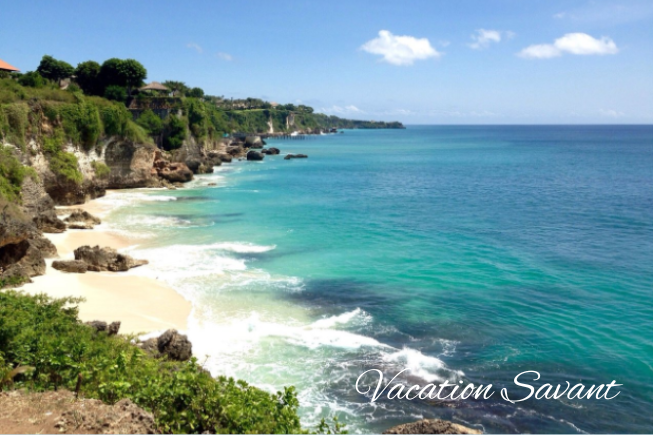
This pairing suits families wanting an easy, safe, resort-adjacent trip, and honeymooners after luxury without Uluwatu’s cliffside logistics. It’s a weaker fit if you want to feel like you’re genuinely “in Bali” rather than in a resort, since both areas lean international and polished, occasionally at the cost of local character. In Jimbaran, walk toward the southern end of the bay for the seafood dinner experience with noticeably fewer tour groups. Both areas are fairly spread out and resort-dependent, so expect to rely on taxis or a driver rather than walking between restaurants and attractions.
If neither of these feels quite right and you’re working with a tighter budget, Kuta and Legian are worth an honest look, including a few reasons some travelers should skip them entirely.
7. Kuta & Legian — Budget-Friendly, But Read This First
Kuta put Bali on the tourist map, and it remains the cheapest, most convenient beach base on the island, just ten minutes from the airport. That convenience comes with real trade-offs worth knowing before you book.
Kuta itself is loud, dense, and geared heavily toward young backpackers and nightlife. It’s genuinely great for first-time surf lessons, with beginner-friendly waves and lessons from around $10 an hour, and unbeatable for late arrivals who don’t want a long drive after a red-eye flight. But some travelers, especially families or anyone prioritizing quiet evenings, find the nightclub density and occasional safety concerns around late-night Kuta reason enough to base elsewhere and just visit for a day. Legian, immediately north, offers a calmer version of the same convenience, with a bit more polish and fewer clubs.
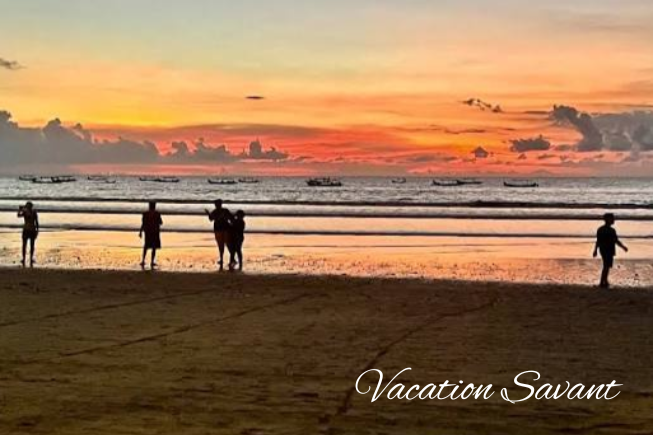
Budget hotels in Kuta run as low as $25 to $50 a night, mid-range options $70 to $150 — the Hard Rock Hotel Bali is a well-known, family-friendly pick in this bracket — and a handful of polished properties toward Legian reach $300 to $500. This area is best suited to budget backpackers, surf beginners, and late-night arrivals who need something close to the airport. It’s a poor match for anyone traveling with kids or planning a honeymoon; nearly every other area on this list handles those trips better. If nightlife noise is a concern, ask specifically how far your hotel sits from the club strip, since “central Kuta” can mean anything from a quiet side street to a room directly above a sound system.
For a quieter version of the same convenience, walk ten minutes north of the main strip toward Echo Beach for noticeably fewer crowds and a better sunset view, still within the area.
If you want to skip the crowds altogether, the island’s east coast, Amed and Candidasa, is the real answer.
8. Amed & Candidasa — Real Quiet, East Coast Bali
If Kuta and Seminyak represent Bali at full volume, Amed and Candidasa are the mute button. This stretch of the east coast sees a fraction of the tourists that the south does, and it shows in the pace of everything: slower meals, quieter mornings, black-sand beaches with room to actually spread out.
Amed is known for diving and snorkeling, with the Japanese Shipwreck near Tulamben as a highlight, and for views of Mount Agung that glow orange at sunset. It’s a genuine trek, about two to two-and-a-half hours from the airport or Canggu, so this isn’t a base for a short trip. Candidasa, a little closer to the south, offers similar coastal calm with slightly easier access, roughly 1.5 to 2 hours from the airport.
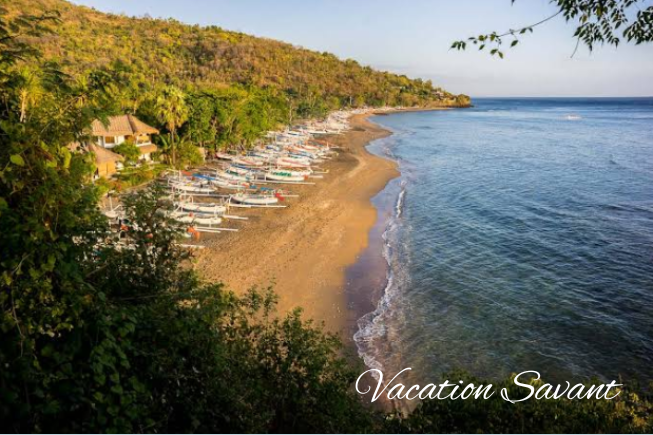
Budget guesthouses in both areas run $15 to $35 a night, some of the cheapest quality stays anywhere on the island. Mid-range options run $40 to $90, and the handful of boutique luxury properties top out around $150 to $250, still far below equivalent luxury pricing in the south. This area is built for divers, snorkelers, and travelers on a longer trip who want a few days completely away from crowds; it’s not the right call for anyone on a trip under a week, since the drive alone eats a meaningful chunk of a short stay.
Rent snorkel gear for a few dollars right on Amed’s beach and swim out to the shipwreck yourself, rather than booking an organized tour; it’s shallow enough that most reasonably confident swimmers can manage it independently. For accommodation, a simple beachfront guesthouse in Amed puts you close enough to walk into the water with your gear, while a small dive-focused resort near Tulamben is convenient if you’re planning repeat shipwreck dives. Toward Candidasa, a boutique clifftop stay with private ocean-view terraces is a nice step up without south-Bali pricing. Public transport essentially doesn’t exist out here, so budget for a private driver at roughly $50 a day, or be genuinely comfortable navigating winding coastal roads on a scooter.
For travelers who want quiet without the two-hour drive, the Nusa Islands just off the southeast coast are the closer alternative.
9. Nusa Lembongan & Nusa Penida — Skip the Mainland Entirely
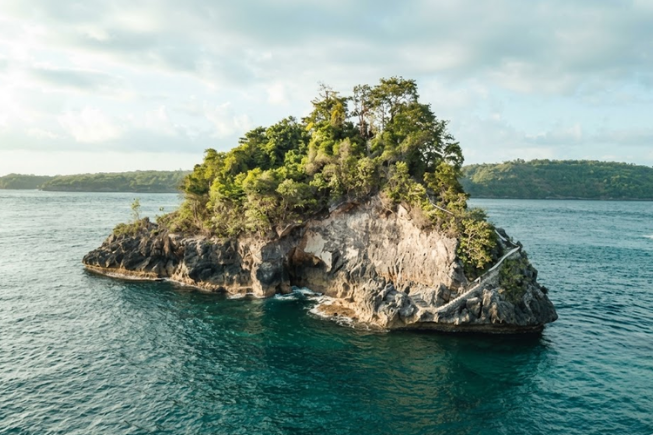
If you’d rather avoid Bali’s mainland traffic altogether, basing yourself on one of the Nusa Islands deserves serious consideration, especially if diving, snorkeling, or dramatic clifftop scenery like Kelingking Beach is a priority for your trip.
Nusa Lembongan is the easier, more developed of the two, reachable by a 30 to 45-minute fast boat from Sanur for around $30 round-trip. Nusa Penida is larger, wilder, and home to the island’s most photographed cliffs and beaches, though it has fewer paved roads and a rougher, more adventurous feel overall.
Guesthouses on Lembongan run $20 to $45 a night, mid-range bungalows $50 to $100, and a small number of boutique cliffside stays on Penida reach $100 to $200. There aren’t many true luxury resorts on either island yet, which is part of what keeps them feeling undeveloped. This pairing suits divers, photographers, and travelers wanting a genuinely different pace from mainland Bali for a few days mid-trip. It’s a weaker fit if you want easy walkability or dislike scooter-dependent transport, since both islands require getting around by scooter or hired driver.
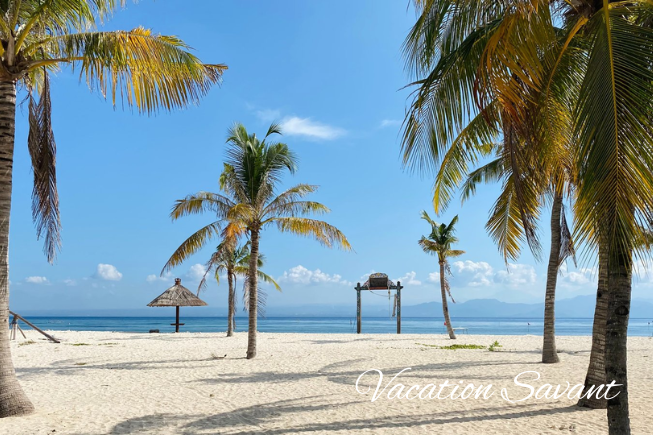
For places to stay, look at a simple guesthouse near Jungutbatu Beach on Lembongan, close to the fast boat dock, or a beach bungalow near Mushroom Bay’s calmer, more protected swimming cove. On Penida, one of the small boutique cliffside stays suits travelers prioritizing sunrise views over Kelingking or Diamond Beach. My honest recommendation: stay overnight on Penida rather than treating it as a day trip from the mainland. The cliff viewpoints are dramatically better, and far less crowded, at sunrise than mid-morning, once the day-trip ferries start arriving. Roads on Penida are rough in places, genuinely difficult even for confident scooter riders, so budget for a driver if you’re not entirely comfortable.
Where to Stay in Bali by Season: Dry Season vs Rainy Season
Bali’s seasons matter more for accommodation choice than most guides let on, and this is one area where where you stay can genuinely make or break a trip depending on when you’re visiting.
The dry season:
Roughly April through October, is when the whole island is at its most accessible. Roads to Amed, Candidasa, and the Nusa Islands are easiest to navigate, seas are calmer for the boat crossing to Lembongan and Penida, and Uluwatu’s cliffside views are at their clearest. If your trip involves any of the more remote areas on this list, this is the window to aim for. July and August are the busiest and priciest months island-wide, so book well ahead if those dates line up with your plans.

The rainy season:
November through March, doesn’t shut Bali down the way people often assume. Rain typically arrives in short, intense afternoon bursts rather than lasting all day, and areas with solid infrastructure — Seminyak, Canggu, Kuta, Sanur, Nusa Dua — handle it just fine. Ubud actually shines during this stretch; the rice terraces turn a deeper green, the jungle feels genuinely alive, and hotel rates tend to drop from peak-season highs. Where the rainy season gets trickier is the more remote, less-developed roads. Amed, Candidasa, and especially Nusa Penida’s unpaved stretches can turn rough and occasionally impassable after heavy rain, so if you’re set on visiting during this window, lean toward a driver rather than a scooter, and build a little flexibility into your plans.
One detail worth knowing regardless of season: December through early January overlaps both a rainy-season month and Bali’s absolute peak booking period, driven by holiday travel rather than weather. Expect premium pricing everywhere on this list if your dates fall in that window, dry season or not.
Common Mistakes When Choosing Where to Stay in Bali
Even if you’ve narrowed your options down to two or three areas, a few common mistakes can still affect your trip. These are the ones travelers mention most often after arriving in Bali.
- Choosing an area based only on Instagram photos. A beautiful feed won’t tell you about traffic, walking distance, or whether an area actually matches your travel style. Before booking, think about how much you plan to walk, whether you’re comfortable riding a scooter, and how much nightlife or quiet you want in the evenings.
- Underestimating Bali’s traffic. A journey that looks like a 20-minute drive on Google Maps can easily take 45 minutes during busy hours, especially around Seminyak, Canggu, and Kuta. Planning your itinerary without considering traffic is one of the biggest reasons travelers end up disappointed with their location.
- Trying to explore the entire island from one hotel. Bali’s beaches, rice terraces, waterfalls, and cliffside viewpoints are spread across very different regions. If you’re staying for a week or more, splitting your trip between two areas usually saves time and gives you a much better overall experience.
- Ignoring the season when booking remote areas. Places like Amed, Candidasa, and Nusa Penida are fantastic, but heavy rain can make coastal and rural roads more challenging. If you’re visiting during the rainy season, check local conditions before choosing a more remote location.
- Assuming every “beachfront” hotel has direct beach access. Some properties advertise beach access even though reaching the shoreline involves a long walk or steep staircase. If easy beach access is important, check the exact distance before booking, particularly around the Bukit Peninsula.
- Waiting too long to book during peak season. The best villas and beachfront resorts often sell out weeks or even months in advance for July, August, and late December through early January. Booking early gives you more choice and often better prices.
Practical Booking Tips
Before you confirm your accommodation, keep these practical tips in mind to make your Bali trip smoother.
- Check whether airport transfers are included. Many hotels and villas in Seminyak, Jimbaran, and Nusa Dua offer complimentary airport pickup, which can save both time and money after a long flight.
- Budget for transportation if you don’t plan to ride a scooter. In destinations like Uluwatu, Amed, Candidasa, and Nusa Penida, hiring a private driver is often the easiest option and typically costs around $40–60 per day.
- Buy a local SIM card or eSIM on arrival. Mobile data makes it much easier to book Grab or Gojek rides, contact your accommodation, and navigate around the island, especially in areas where hotel Wi-Fi can be unreliable.
- Choose accommodation close to the places you’ll visit most. Staying near your main attractions reduces travel time and helps you avoid spending hours stuck in Bali’s traffic.
- Read recent guest reviews, not just the overall rating. Reviews from the last few months often reveal useful details about construction noise, Wi-Fi reliability, cleanliness, and service that older reviews may no longer reflect.
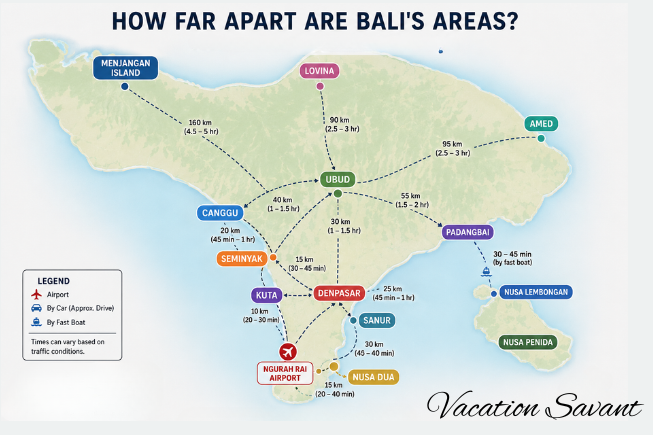
How Far Apart Are Bali’s Areas? (Travel-Time Matrix)
This is the piece almost no other guide lays out clearly: actual drive times between the areas themselves, not just distance from the airport. Traffic varies by time of day, so treat these as realistic averages rather than guarantees.
| From \ To | Seminyak | Canggu | Ubud | Uluwatu | Sanur |
| Seminyak | — | 20–25 min | 1–1.25 hr | 45 min–1 hr | 30–40 min |
| Canggu | 20–25 min | — | 1–1.5 hr | 1–1.25 hr | 40–50 min |
| Ubud | 1–1.25 hr | 1–1.5 hr | — | 1.5–2 hr | 1–1.25 hr |
| Uluwatu | 45 min–1 hr | 1–1.25 hr | 1.5–2 hr | — | 45 min–1 hr |
| Sanur | 30–40 min | 40–50 min | 1–1.25 hr | 45 min–1 hr | — |
The takeaway: Seminyak and Canggu function as a single “south Bali” zone you can comfortably split a stay between. Ubud is genuinely far from everywhere coastal, so it’s worth planning as its own leg of the trip rather than a quick add-on.
FAQs About Where to Stay in Bali
What’s the best area to stay in Bali for first-time visitors?
Seminyak is the best place to stay in Bali for most first-time visitors becaus
e it combines beaches, restaurants, shopping, and easy access to day trips. If your trip is seven days or longer, split your stay by spending three or four nights in Seminyak and the rest in Ubud. That combination gives you Bali’s beach lifestyle alongside its cultural heart without spending too much time on the road.
Should I stay in Canggu or Seminyak?
Choose Seminyak if you want convenience, upscale dining, and a lively beach club scene. Choose Canggu if you prefer surfing, cafés, and a more creative, laid-back atmosphere. Both are excellent bases, but they offer different experiences. Seminyak is easier to explore on foot, while Canggu appeals more to digital nomads and travelers who don’t mind heavier traffic in exchange for a trendier vibe.
What’s the best area in Bali for a honeymoon?
Uluwatu is the best area in Bali for a honeymoon thanks to its luxury cliffside resorts, ocean views, and romantic sunsets. Couples looking for a quieter escape often prefer Uluwatu over the busier beach towns. If staying close to the airport is important, Jimbaran is another excellent choice with peaceful beaches and famous sunset seafood restaurants.
Where should families stay in Bali?
Sanur and Nusa Dua are the best places to stay in Bali for families because they offer calmer beaches, family-friendly resorts, and a slower pace. Unlike Kuta or Canggu, these areas have gentler waves and less nightlife, making them better suited for young children and multi-generational trips.
Do I need to rent a scooter in Bali?
No, you don’t need a scooter to enjoy Bali, but your transportation options depend on where you stay. In Seminyak, Sanur, and parts of Ubud, ride-hailing apps like Grab and Gojek make getting around easy. More remote destinations such as Uluwatu, Amed, and Nusa Penida are easier to explore with a scooter or a private driver, who typically costs around $40–50 per day.
Is it better to stay in one place or split my Bali trip?
If you’re visiting Bali for seven days or more, splitting your stay between two areas usually gives you a much better experience. Bali’s regions feel surprisingly different, from Ubud’s rice terraces to Seminyak’s beaches and Uluwatu’s dramatic cliffs. For shorter trips of four or five days, staying in one well-chosen area saves valuable vacation time.
What’s the cheapest area to stay in Bali?
Amed, Candidasa, and the outskirts of Ubud are some of the cheapest places to stay in Bali. Budget guesthouses often start around $15–20 per night, while local homestays provide excellent value without sacrificing comfort. These areas are quieter than Seminyak or Canggu, making them ideal if your priority is stretching your travel budget.
Is it worth staying near Ngurah Rai International Airport?
Yes, staying near Ngurah Rai International Airport is worth it if you’re only spending one or two nights in Bali. Jimbaran and Kuta are both within about 15 minutes of the airport, helping you avoid long transfers and maximize your limited time. For longer vacations, however, it’s usually worth heading to another part of the island.
Which area in Bali has the best beaches?
Uluwatu offers Bali’s best beaches for dramatic scenery and surfing, while Nusa Dua is better for calm swimming and family-friendly beaches. If you’re looking for a lively beach atmosphere with restaurants and sunset bars, Seminyak is another excellent option. The best choice ultimately depends on the type of beach experience you’re after.
Where should I stay in Bali if I want nightlife?
Seminyak is the best area to stay in Bali for nightlife, with stylish beach clubs, cocktail bars, and late-night restaurants all within easy reach. Travelers looking for a younger, more casual nightlife scene often prefer Canggu, while Kuta remains the best option for budget-friendly bars and lively entertainment.
Still working out the rest of the logistics? Our guides on is Bali safe, best Bali beaches for water sports, and the 7-day Bali itinerary cover everything else worth knowing before you book.